
What’s in Your Agent Workspace?
Models are commodity. Agent CLIs are converging. The workspace you assemble around them is the only thing that’s yours.

I write about AI agents, product thinking, and what it actually looks like to build in the age of agentic systems.
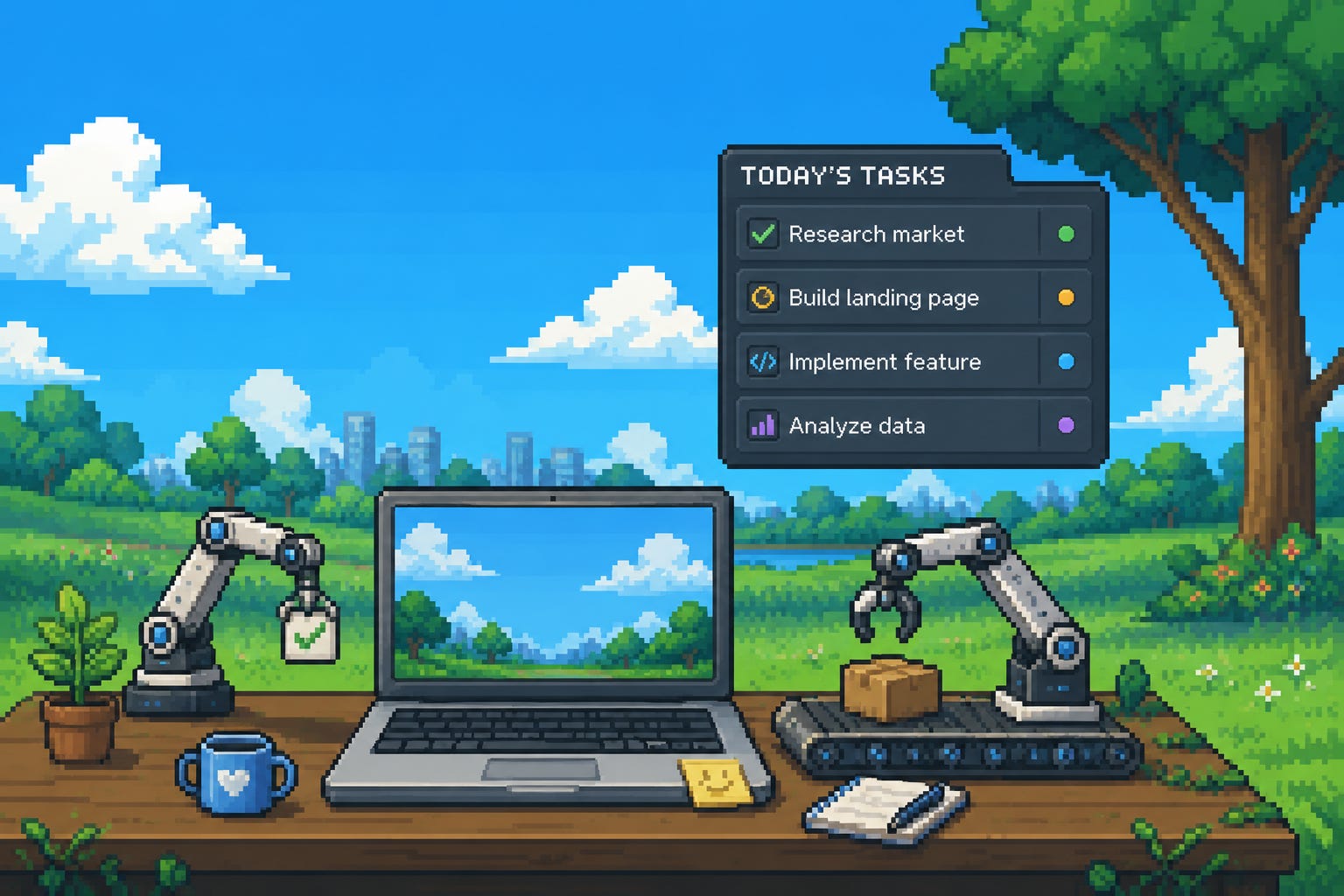
Most weeks now I run three AI agents in parallel — two on a VPS, one on my laptop. Last week alone they worked through fundraising strategy, a stack of GitHub repos and emerging tech trends, meeting notes, and code. Same class of model in all three windows. I was the conductor, not the typist. A year ago I couldn’t have done this — not because the models were worse, but because I hadn’t yet assembled the thing that made it possible.
The same week, two signals from the wider ecosystem. Stripe gave AI agents wallets — an agent can now buy a $35 vitamin C serum on your behalf without ever touching your real credentials. A developer named mvanhorn shipped cli-printing-press, a tool that rewrites third-party APIs into agent-native binaries: typed exit codes, 60-80% fewer tokens than the MCP equivalent. “Exit code 0 = done.” Agents are about to act in the real world. The substrate is being rebuilt to let them. Most people’s local setup hasn’t caught up.
There’s an old Chinese saying from the Analects: 工欲善其事,必先利其器 — “A craftsman who wants to do good work must first sharpen his tools.” The word for tool is 器. And in 2026, the 器 isn’t the model. It isn’t even the agent CLI. It’s the agent workspace you assemble around them. Almost nobody is assembling one.
Tools come and go. Your workspace is yours.
Most “AI tooling” content fights over the wrong layer. Which model. Which IDE. Which subscription. Which $200/month plan.
It’s the wrong question. Models are commodity already. Agent CLIs are converging fast — Hermes, Claude Code, OpenClaw, Codex, Cursor all read markdown config files, all support MCP, all get easier to migrate between every quarter. None of these are your moat.
The only thing that doesn’t get replaced when you switch tools is the workspace you assembled around them.
I’ve spent the last 2-3 years on one hypothesis: human instructions to machines should compound, not dissipate. Every time you re-explain context, you’re paying interest on a debt that should have been an asset. This article is about what you can do today, by hand.
The three layers of an agent workspace
An agent workspace has three layers. Each one is invisible to anyone else. Each one compounds with the next.
Layer 1 — Project context. “Who you are. What we’re doing.”This is the file your agent reads on entry. CLAUDE.md, AGENTS.md, whatever the agent calls it. It tells the agent: my project, my role, what good output looks like, what to avoid. Static. Without it, every session starts from zero.
A practical example: this Substack repo has a CLAUDE.md that turns a generic Claude Code into a Curiosity Insights writing assistant. Brand voice rules. SOP checklist. Per-stage workflow. Same model, different identity, in one file.
Layer 2 — Behavioral rules. “How you work.” Hooks. Permissions. Settings. The rules that run every session, every tool call. Without this, you keep correcting the same mistakes — please don’t push without my approval, please format the file, please don’t rm -rf the docs folder.
